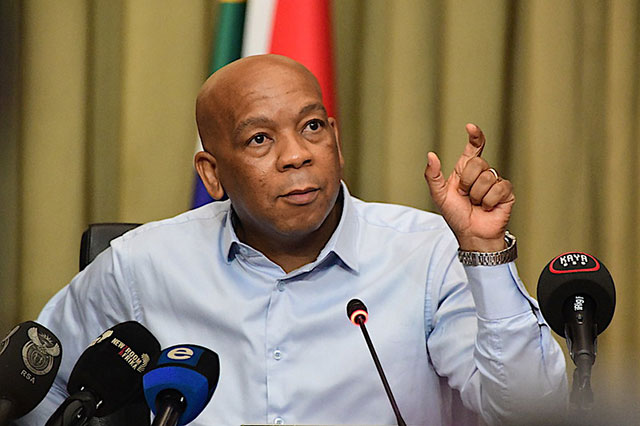
Johannesburg – Electricity Minister Kgosientsho Ramokgopa plans to increase the amount of free basic electricity available to poor households from 50 kWh to between 200 and 300 kWh, using an existing R21 billion government allocation.
Speaking during a media briefing Ramokgopa said the increase would not require additional government funding, Eskom bailouts or higher electricity tariffs for paying customers.
The R21 billion equitable share grant is currently channelled through municipalities, which are responsible for providing free electricity to qualifying indigent households.
However, Ramokgopa said much of the money does not reach the households it is intended to support because municipalities face competing financial pressures.
“Free basic electricity must reach the households to whom it is intended. There is a R21 billion allocation for poor households to get free electricity,” Ramokgopa said during a media briefing on 25 September.
“They are not getting it because the mechanism of getting it to the end consumer goes through municipalities. When they receive that money, they allocate it to other areas.”
The minister said municipalities often use the funds to pay salaries and service providers, preventing the money from reaching poor households.
“When the money lands in the account of municipalities, because they have got other spending pressures, they pay the salaries of municipal employees, and they pay service providers,” he said.
Ramokgopa wants the funding to be redirected directly to qualifying households through Eskom, with government using databases such as SASSA and SARS to identify beneficiaries.
“There is a platform we can create. We know there are databases in the country like SASSA and SARS. We can triangulate the poor households and provide direct support,” he said.
Proposed increase
He said Eskom had been instructed to develop a platform that would allow government to bypass municipalities and deliver the benefit directly to indigent households through the utility’s smart-meter infrastructure.
“We told Eskom to build a platform that will help us to directly support indigent households without the money going through municipalities,” Ramokgopa said.
“The money is not supposed to be with the municipality. It is meant to be with the end consumer, so we will take it directly to the end consumer.”
The proposed increase could also help Eskom tackle illegal electricity connections, which contribute to revenue losses and put pressure on the electricity distribution network.
Eskom generation head Bheki Nxumalo said poor households who do not receive the free electricity intended for them may resort to illegal connections.
“If those people who are meant to get free electricity do not get it, they end up finding power in other means,” Nxumalo said.
Ramokgopa believes that ensuring the R21 billion reaches its intended beneficiaries could therefore allow poor households to receive substantially more free electricity while reducing electricity theft and pressure on Eskom’s infrastructure.
Follow African Insider on Facebook, X and Instagram
Picture: X /SAgovnews
For more African news, visit Africaninsider.com
Compiled by Betha Madhomu