Cape Town – President Cyril Ramaphosa says South Africa must move beyond simply ending load shedding and focus on building an electricity system that is reliable, affordable and increasingly clean.
Writing in his weekly newsletter, From the Desk of the President, Ramaphosa said the country’s next challenge was addressing the rising cost of electricity while reducing its dependence on a single utility.
The president said the reforms underway would fundamentally change the structure of South Africa’s electricity market, while keeping Eskom and the transmission grid under state ownership.
“We need an electricity system in which Eskom is strong, but in which it does not have to carry the entire burden of investing in and supplying the country’s electricity,” Ramaphosa said.
The comments come as government moves to establish an independent, state-owned Transmission System Operator (TSO) that will manage the national grid and electricity market.
The TSO is expected to provide equal access to the grid for Eskom and private power producers, creating a more competitive electricity market and encouraging investment in new generation and transmission infrastructure.
Ramaphosa said the model would allow multiple electricity producers to compete to supply power, which could improve efficiency and place downward pressure on prices.
The government’s restructuring plans have received backing from the Eskom board. Following a meeting with Eskom chairperson Mteto Nyati on 27 August, the Presidency said Ramaphosa reaffirmed the government’s commitment to establishing an independent TSO.
The board also confirmed its support for the government’s policy direction while stressing the need to protect Eskom’s financial position during the restructuring process.
The reforms follow Cabinet’s approval of a Revised Electricity Pricing Policy for public comment in July.
The policy is intended to improve transparency around electricity tariffs, support cost-reflective pricing and create a framework for competition across generation, transmission, distribution and retail.
For consumers, however, affordability remains a major concern.
Eskom’s tariffs increased by an average 8.76% for direct customers from April 2026, while municipal tariffs increased by an average 9.01% from July.
Dear Fellow South African,
A reliable electricity supply is the backbone of oureconomy. It is essential for development and growth.
Not long ago, South Africans planned their lives around load shedding. Businesses and households that could afford to had to buy generators… pic.twitter.com/6Bh8PVtrr6
— Cyril Ramaphosa 🇿🇦 (@CyrilRamaphosa) August 31, 2026
Ramaphosa acknowledged that the country’s electricity crisis was not only about shortages.
“Overcoming load shedding was never the end of our work,” he said, arguing that high electricity prices were placing pressure on households and making South African businesses less competitive.
He said the country needed to take advantage of its strong solar and wind resources to increase the supply of cheaper and cleaner electricity.
The president also stressed that the restructuring of the electricity sector does not amount to privatising Eskom.
Eskom will remain state-owned and will be expected to compete alongside independent power producers, while the transmission system will remain under state ownership.
“The purpose of the electricity reform is therefore not to privatise Eskom. It is to build a better electricity system,” Ramaphosa said.
He compared the planned reforms with the transformation of South Africa’s telecommunications sector, where opening the market to competition brought new investment, technologies and greater consumer choice.
Ramaphosa said a similar approach could unlock billions of rands in investment in electricity generation and transmission.
Government is also promising that workers will not bear the cost of the restructuring.
According to Ramaphosa, no jobs should be lost directly because of the establishment of the TSO, while organised labour will be consulted throughout the process.
The reforms are being overseen by the Eskom Restructuring Task Team, which includes representatives from the Presidency, National Treasury, the Department of Electricity and Energy, Eskom and the National Transmission Company South Africa.
The government has previously said the new transmission structure is intended to create a level playing field for electricity producers and unlock investment in the sector.
Ramaphosa said the ultimate objective was to ensure that households receive more affordable electricity while businesses have access to reliable power that supports investment, expansion and job creation.
“South Africa’s energy future” therefore hinges not only on keeping the lights on, but on creating an electricity market capable of delivering cheaper power and sustained economic growth.
Follow African Insider on Facebook, X and Instagram
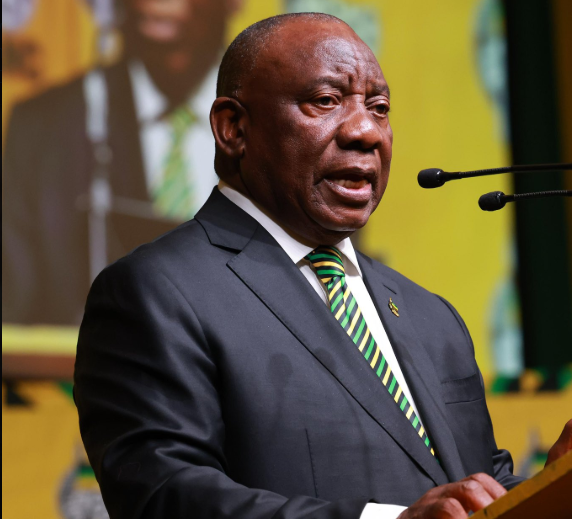
Picture: X / @MYANC
For more African news, visit Africaninsider.com
Compiled by Glaan Sibuyi