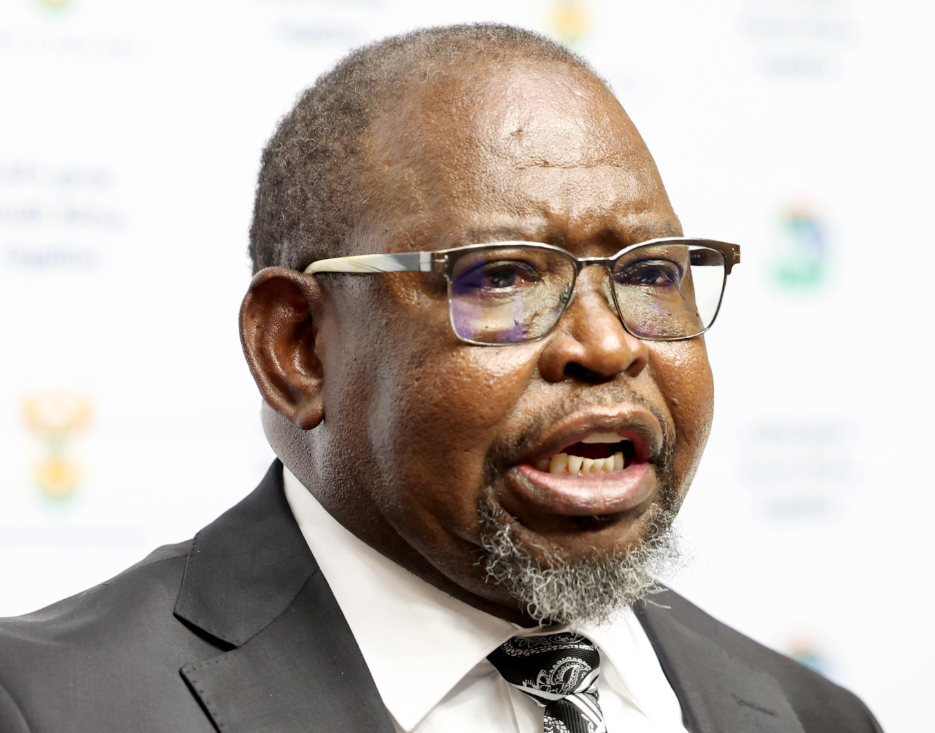
Johannesburg – Finance Minister Enoch Godongwana is defending the Treasury’s power to change South Africa’s value-added tax (VAT) rate through a Budget announcement, despite a High Court ruling that found the mechanism unconstitutional.
The dispute is now before the Constitutional Court, where Godongwana has argued that the ability to adjust VAT through the Budget is necessary for effective fiscal management. According to News24, the minister maintains that he should retain the power to announce a VAT rate change in his Budget speech.
The case centres on Section 7(4) of the VAT Act, which allows the finance minister to announce a change to the VAT rate in the Budget, with the new rate taking effect before Parliament formally approves the necessary legislation.
The Western Cape High Court declared the provision unconstitutional in March, finding that it effectively delegated Parliament’s taxing powers to the executive. The declaration was suspended for 24 months to give Parliament time to address the constitutional defect, while the matter was referred to the Constitutional Court for confirmation, The Citizen reported.
Changing a national tax
The court found that changing the VAT rate amounts to changing a national tax, a power that the Constitution reserves for Parliament.
The court was particularly concerned about the consequences for taxpayers if VAT was collected at a higher rate and Parliament subsequently refused to approve the change.
VAT already paid cannot practically be recovered from consumers.
The legal battle stems from Godongwana’s 2025 Budget, when he proposed increasing VAT from 15% to 15.5%, followed by a further increase to 16%. The proposal was eventually withdrawn after intense political opposition.
Godongwana and SARS opposed the legal challenge, arguing that Section 7(4) allows the minister to adjust an existing tax rather than create a new one and that the mechanism assists government in managing public finances.
Significant implications
However, the Business Day reported that the implications of the VAT judgment could extend beyond VAT, potentially exposing other taxes that have historically been adjusted through executive notices to similar constitutional challenges.
University of Johannesburg macroeconomic and fiscal analyst Professor Dumisani Jantjies warned that “the VAT judgment makes other taxes very vulnerable”, adding that Parliament would effectively become the sole authority for approving tax changes if the ruling stands.
The Constitutional Court’s decision could therefore have significant implications for how South Africa raises revenue, particularly at a time when government is under pressure to strengthen public finances while limiting the tax burden on households.
For context, SARS currently lists VAT at 15%, following the reversal of the previously planned VAT increase.
Follow African Insider on Facebook, X and Instagram
Picture: X/@GovernmentZA
For more African news, visit Africaninsider.com
Compiled by Betha Madhomu