Bissau – Military-run Guinea-Bissau holds a referendum on Sunday on a constitutional change that would give the president more powers ahead of a general election meant to restore civilian rule later this year.
It follows a string of other African countries including Zimbabwe and Chad that have amended their constitutions in recent years to extend term lengths, remove age limits or strengthen powers of the executive.
The army seized power in Portuguese-speaking Guinea-Bissau in November, just days after a presidential election, overthrowing the head of state and suspending the electoral process.
The ruling junta has since unanimously approved a constitutional amendment for the country to switch to a presidential system from a parliamentary one and now the public will be asked to back it.
It would allow the head of state to appoint and dismiss the prime minister and members of the government, and to dissolve parliament.
The junta says the change seeks to stabilise institutions before new presidential and parliamentary elections designed to hand power back to civilians scheduled for December 6.
But the political climate is tense in the coup-prone coastal west African country where the opposition has urged voters to boycott the referendum “in a context of restrictions on public freedoms”.
“Political activities are suspended, party headquarters are closed and political groups are banned from taking part in the campaign,” the PAIGC, the historic party that led the country to independence from Portugal in 1974, said in a statement.
On Sunday, voters will answer ‘yes’ or ‘no’ to the question: Do you agree with the entry into force of the new constitution approved by the National Transitional Council?
‘Dangerous’
The new text proposes abandoning the old system whereby the prime minister came from the parliamentary majority, which has led to uncomfortable power-sharing.
Following 2023 legislative elections, then-president Umaro Sissoco Embalo dissolved the opposition-dominated parliament that December in response to what he described as an attempted coup.
He then ruled by decree until he was ousted by the army in November 2025, a day before provisional results of national elections were to be announced.
Nelson Moreira, a member of the National Transitional Council (CNT), the interim legislative body whose 65 members were appointed by the junta, told AFP that the proposed constitution would prevent such conflicts between the presidency and the prime minister’s office, which have undermined stability in the past.
“This popular consultation serves as a tool to rewrite the fundamental law, riddled with loopholes,” he said.
Political analyst Malam Fati said “the transitional leaders believe that this reform will put an end to the frequent institutional deadlocks that have marked Guinea-Bissau’s political life.”
But others within the political class and civil society fiercely dispute such a thorough rewriting of the constitution by an unelected transitional authority.
Abubacar Ture, head of the Human Rights League, warned that the proposed change was “dangerous for our democracy”.
“The presidential system that the junta wants to impose will concentrate all powers in the hands of a single man,” Ture recently told reporters.
Lisbon-based lawyer and political analyst Fransual Dias questioned “how can people who have no legitimacy to revise the constitution ask the people to approve it through a referendum?”
“It’s a circus they’re staging,” he told a Portuguese radio station.
The timing of the vote — during the rainy season — has also drawn scrutiny, as some regions risk being cut off by the bad weather.
Among the world’s poorest countries, Guinea-Bissau has experienced five coups and a string of attempted putsches since 1974.
Follow African Insider on Facebook, X and Instagram
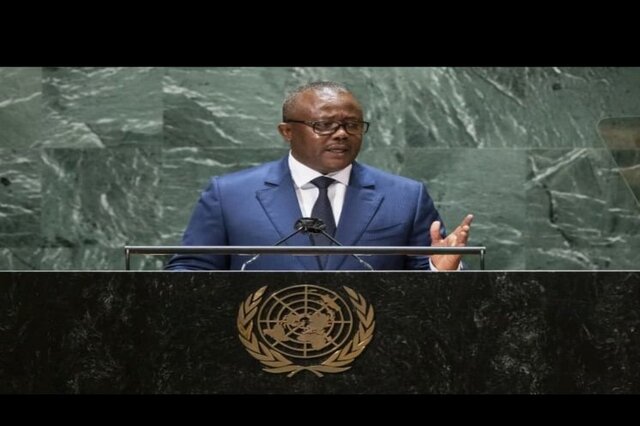
Picture: X/ @USEmbalo
For more African news, visit Africaninsider.com
Source: AFP