Cape Town – South Africa may have gained some relief from lower inflation, but its economy remains under severe pressure, according to Aluma Capital Chief Economist Frederick Mitchell.
The country’s 4.3% July inflation rate could give the Reserve Bank room to maintain interest-rate stability.
However, Mitchell warned that high unemployment, declining mining and manufacturing output and weak investment continue to weigh heavily on the economy.
“Monetary reprieve alone cannot offset severe headwinds in the real economy, where labour-intensive mining and manufacturing are contracting, investment remains depressed,” he said.
“The unemployment figures for the second quarter of 2026 reaffirmed South Africa’s deep structural crisis,” Mitchell said, warning that the country invests too little in infrastructure, machinery and productive capacity.
He also raised concerns about deteriorating relations with the United States, saying South African exports to the US had plunged 56% on an annualised basis amid tariffs and market uncertainty.
Structural economic interests
Mitchell warned that losing preferential access to the US market under AGOA could have serious consequences for jobs and investment, with US companies supporting about 400,000 South African livelihoods.
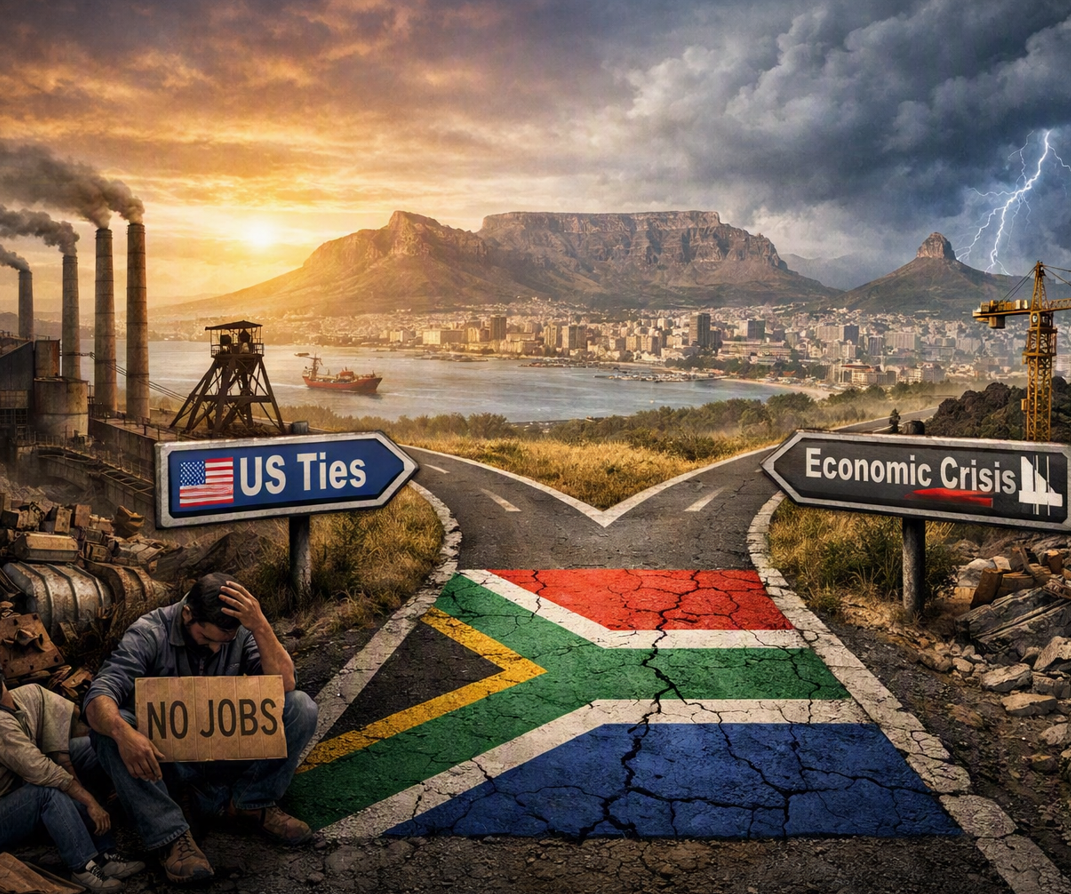
He said South Africa was at a “defining crossroads” and needed to revive production, increase investment, implement reforms and ease tensions with Washington.
“South Africa cannot afford to lose sight of where its structural economic interests lie. While the African Growth and Opportunity Act (AGOA) has been extended to December 2028, individual country eligibility remains subject to annual discretionary review by the US government. Should South Africa’s eligibility be revoked, the economic consequences would be severe,” Mitchell said.
He added: “The United States is an indispensable net contributor to the South African economy. American multinational corporations directly and indirectly support approximately 400,000 South African livelihoods.”
The latest economic data underline the scale of the challenge facing the country. Statistics South Africa reported that the official unemployment rate increased to 33.6% in the second quarter of 2026, from 32.7% in the first quarter.
The number of unemployed people increased by 345,000 to 8.5 million, while employment declined by 16,000 to 16.7 million. Youth unemployment was even higher, rising to 47.4%.
The deterioration was also visible in key productive sectors. Stats SA data showed that employment fell in mining and manufacturing during the second quarter, while the Bureau for Economic Research reported that manufacturing production was down 1.5% for the quarter and mining production declined by 2.7% compared with the first quarter.
Slower growth
Mining was particularly affected by weaker platinum-group metals, coal and iron ore output.
The inflation picture, meanwhile, provides some short-term relief but does not necessarily signal a broad economic recovery. Stats SA said headline inflation fell from 5% in June to 4.3% in July, helped by lower food and fuel inflation. Food and non-alcoholic beverage inflation dropped to 0.9%, its lowest level in more than 16 years, while the monthly CPI increase slowed to 0.2% from 0.7% in June.
The South African Reserve Bank has also warned that the economy faces weaker momentum. In its July monetary policy statement, the central bank said first-quarter growth was stronger than expected but was driven largely by net exports rather than domestic demand. It anticipated slower growth during the second and third quarters, citing weaker consumer and business confidence, lower activity across sectors and declining export commodity prices.
Investment remains another critical weakness. President Cyril Ramaphosa said in May that fixed investment was sitting at only around 15% of GDP, and that South Africa needed to double it for a sustained period if it was to achieve stronger growth and create more jobs. Government has committed more than R1 trillion to infrastructure over three years, with projects focused on ports, freight rail, roads, electricity and water.
Losing eligibility
There are, however, signs that government is trying to address some of the structural constraints identified by Mitchell. The third phase of the Government-Business Partnership, launched in August, is focused on converting economic reforms into stronger growth and job creation, with mining, agriculture, agro-processing, tourism and infrastructure identified as sectors with significant employment potential.
The government has also set a new ambition of mobilising R3 trillion in investment by 2030. At the 2026 South Africa Investment Conference, investment pledges reached R889.8 billion, while government said more than R1 trillion would be spent on infrastructure over the next three years.
The US relationship remains a particularly important risk for exporters. The South African Reserve Bank said the US accounted for 7.1% of South Africa’s exports in 2025, down from 7.7% in 2024, with tariffs introduced by Washington contributing to the decline. The central bank noted that value-added exports, particularly vehicles and transport equipment, were among those most affected.
BusinessTech reported separately that while AGOA has been extended to December 2028, South Africa’s eligibility remains subject to annual review by the US government.
Mitchell warned that losing eligibility could have severe consequences, particularly given the role of American multinational companies in supporting approximately 400,000 South African livelihoods.
Follow African Insider on Facebook, X and Instagram
Picture: Copilot
For more African news, visit Africaninsider.com
Compiled by Betha Madhomu