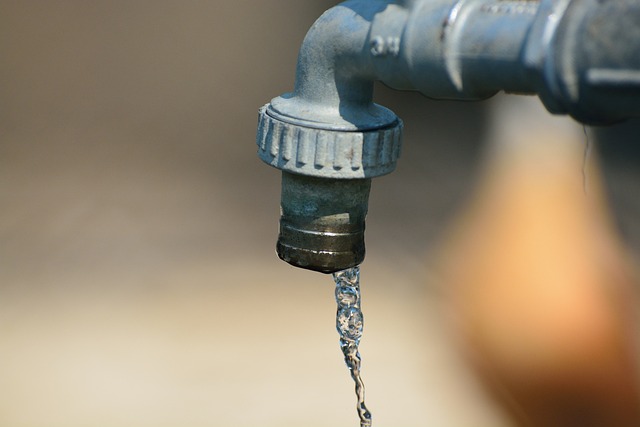
Addis Ababa – Saba has become used to coping with the chronic water shortages that have hit the Eritrean capital, Asmara, in recent years.
“The worst thing is that over time, people take this as normal and do not even complain about it,” the civil servant told AFP.
But Saba, whose name was changed for her safety because of the ultra-authoritarian regime in Eritrea, still considers her family more fortunate than others.
“We receive remittances from relatives abroad. We buy water from water tankers, which are expensive and not easily available.”
But it is far from satisfactory.
Saba, who is in her forties and has two children, has to limit the household’s water consumption.
Showers and laundry are staggered and the toilet is only flushed when all family members have used it.
“This means we use it while it still has a foul odour,” she explained.
Water shortages happen every dry season in Eritrea but the regularity and fear of the authorities means people endure it, she said.
The country on the Horn of Africa, which is home to about 3.5 million people, is one of the most closed-off in the world.
Isaias Afwerki has been president since independence in 1993, the constitution has been abolished and no elections have ever been held.
‘Unsafe’
Independent media are banned and foreign journalists are not allowed into Eritrea, which ranked bottom of watchdog Reporters Without Borders’ 2026 press freedom index — behind North Korea.
Critical voices can be held incommunicado for years without trial, making it extremely difficult to get testimonies out of the country.
To obtain them, AFP sent questions to an intermediary, who then forwarded the answers.
As a result, the situation in other, less populated cities than Asmara is hard to determine but some are located in arid zones.
Eritrea’s Information Minister Yemane Gebremeskel did not respond to questions sent by AFP.
According to a study published in July in Advances in Geographical and Environmental Sciences, “population growth, climate change, poor infrastructure, and ineffective water management make it harder to supply reliable water” in Eritrea.
“When available, water supply is often irregular and unsafe,” it added. “The city mostly meets its drinking needs from reservoirs built to store water during rainy seasons.”
Salt water
When fresh water is not available, some turn to salt water from the Red Sea, some 60 kilometres (37 miles) from the capital.
Mebrat, also not her real name, lives in the poor Mihram Shira neighbourhood, and regularly buys seawater, which is transported up to the highlands, where Asmara sits 2,300 metres (7,545 feet) above sea level.
“We buy water from horse- or mule-driven water tankers,” she said.
The housewife, who is in her fifties, said a barrel of saltwater costs 150 nakfa ($10) — a huge sum in a country where 58 percent of the population in 2021 lived on less than $3 a day, according to the UN.
She and her husband have to go without showers so their children can wash. The cost of water also cuts how much she can spend on food.
Mohamed Kheir Omer, a former activist in the fight for independence who is now a researcher in exile, said water shortages had been a “persistent problem” for years.
“There is virtually no investment in infrastructure, as the regime prefers to invest in military capabilities,” he said.
Heavily militarised Eritrea has unlimited military service for young people and has bitter relations with neighbouring Ethiopia, which annexed it in the 1950s.
According to the latest World Bank figures, 20 percent of the country’s GDP went on military spending in 2003.
“It’s not just water that’s in short supply right now; there’s also a shortage of medicine, and power outages are frequent,” said Mohamed Kheir Omer.
In July, Saba was eagerly awaiting rain to stock up on water.
“When rain comes, we place every container we have outside, like barrels, jerrycans, even cups,” she said.
Follow African Insider on Facebook, X and Instagram
Picture: Pixabay
For more African news, visit Africaninsider.com
Source: AFP