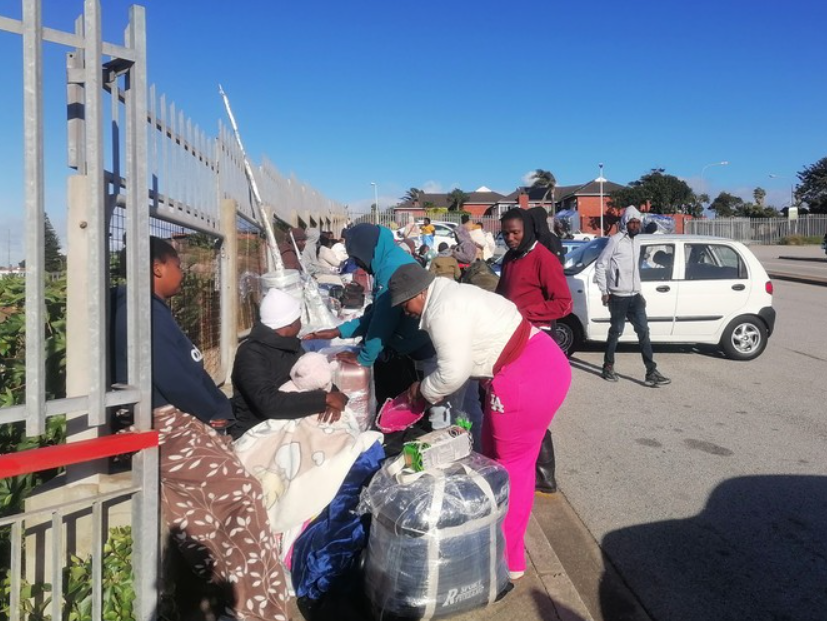
Zimbabwean nationals wait to board repatriation buses outside the South End Fire Station in Gqeberha after being forced out of their homes. Photos: Joseph Chirume
By Joseph Chirume
- Immigrant families were forcibly removed and their homes homes ransacked by residents of Kuyga, Greenbushes, in Gqeberha this week.
- A church with a mostly Malawian congregation was burnt to ashes on Thursday morning.
- Many immigrants sought refuge at the South End fire station.
- Nelson Mandela Bay Municipality says it has assisted the repatriation of nearly 400 Zimbabwean.
- President Cyril Ramaphosa has approved the deployment of more than 3,000 soldiers until the end of July in response to violence against immigrants.
Hundreds of immigrants have been forcibly removed and their homes ransacked by residents of Kuyga, Greenbushes, in Gqeberha this week. A church with a mostly Malawian congregation was also burnt to ashes on Thursday morning.
President Cyril Ramaphosa has approved the deployment of more than 3,000 soldiers until the end of July in response to anti-immigrant violence.
At the site of the burnt church, a member of the congregation said, “I found nothing except ashes and burnt zinc sheets. I saw youths pushing wheelbarrows full of stolen valuables to sell at local scrap yards.”
He and his wife are staying at a church in town while they wait for transport to Malawi.
In Greenbushes, the victims say their problems started at a meeting on Wednesday when some residents accused immigrants of occupying land in an informal settlement. All immigrants were warned to leave on Thursday.
“Criminals took advantage [of the dispute] and went door-to-door where foreigners live, looting valuables,” said a Zimbabwean man who managed to flee the mob with only his backpack. He asked not to be identified.
He and many other immigrants sought refuge at the South End fire station.
They are expected to board a repatriation bus to Zimbabwe soon.
A Zimbabwean mother of three told GroundUp a crowd of people wearing balaclavas kicked open her front door and demanded everybody leave the house.
She said her children were terrified. “We ran to an open space where we saw other foreigners, including several Malawians who were desperate and fearful. We decided to walk to the Kabega Park police station,” she said.
“My eldest daughter is in grade 12. She has had to leave school … My husband is a mechanic, so it should not be difficult for him to do piece jobs in Harare,” she said.
A Zimbabwean man, who had lived in the area for more than 15 years, said he was shocked to see his neighbours turn against them.
“We all have Zimbabwe Exemption Permits. I have lived with these people for several years and now they are bringing people from other areas to violently remove me. They laughed at and teased my family. I never thought South Africans were like this. I am taking my belongings to a safe place and going home for a brief rest,” he said.
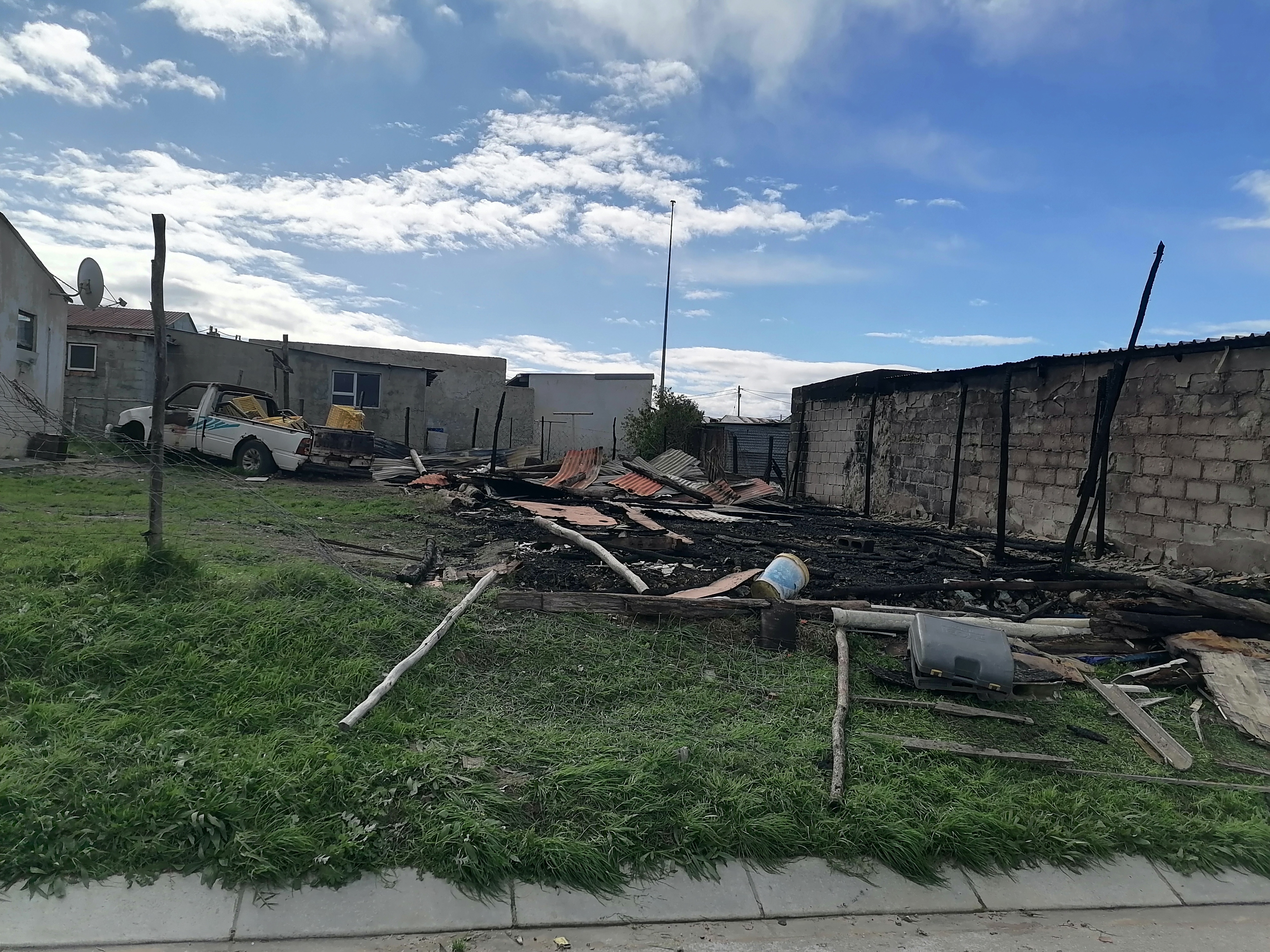
The charred rubble of what remains of the Malawian church torched by a mob on Thursday morning.
Police spokesperson Captain Sandra Janse van Rensburg said, “The South African Police Service in Kabega Park confirms that there are current tensions in the Greenbushes area. SAPS wishes to clarify that it is not evicting any residents from their homes. SAPS is obtaining statements as part of its investigation to identify the individual or individuals allegedly instigating members of the community.”
We saw Gift of the Givers volunteers preparing food for hundreds of Zimbabwean nationals camped at the fire station.
The Nelson Mandela Bay Municipality said in a statement that it had assisted with the repatriation of nearly 400 Zimbabweans who were victims of xenophobic violence.
“No serious incidents have been reported, except for isolated instances of intimidation in Kuyga. The security cluster, which includes SAPS, Metro Police, Municipal Security, the Border Management Authority and other stakeholders, continues to monitor the situation closely for any further incidents,” said spokesperson Sithembiso Soyaya.
Irna Senekal, of the Siyafana Eastern Cape Coordination Group, said, “We have drawn on our networks in communities to bring immediate support where we could. In some instances, this has included community members monitoring and de-escalating potential conflict. We also are mobilising within faith communities to provide shelter and food in the case of Kuyga.”
© 2026 GroundUp. This article is published under the GroundUp Republication Licence Version 1.0. Email [email protected] to request permission to republish.
Follow African Insider on Facebook, X and Instagram
Picture: GroundUp
For more African news, visit Africaninsider.com