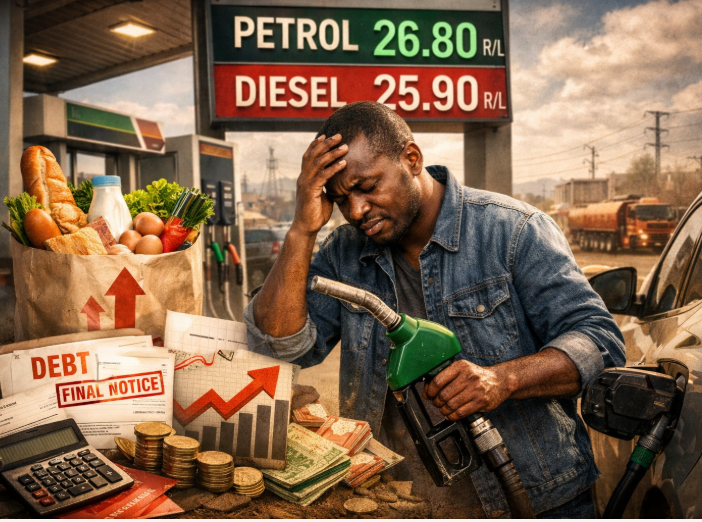
Cape Town – South African motorists are expected to face another fuel price hike in June, with petrol prices likely to increase by up to R2.20 per litre and diesel by at least R3.
The anticipated increases are largely being driven by global oil price volatility linked to the ongoing conflict in the Middle East and stalled negotiations over the reopening of the Strait of Hormuz.
According to IOL, experts warn that the impact will extend far beyond the fuel pump, affecting food prices, transport costs and other household expenses.
Momentum Group Foundation’s Salem Nyati said rising fuel prices often fuel inflation and could push financially strained consumers deeper into debt as they turn to credit to make ends meet.
“It feeds directly into the cost of food, transport and almost every essential in your monthly budget.
Global oil price shocks
“We’ve seen this pattern before: fuel goes up, inflation follows, and households that were already stretched suddenly find themselves under real pressure. The risk now is that many consumers try to ‘bridge the gap’ with credit, and that’s where the real danger lies,” the report quoted Nyati as saying.
The Durban Chamber of Commerce and Industry has also raised concerns, noting that South Africa’s heavy reliance on imported crude oil leaves businesses vulnerable to global oil price shocks. Sectors such as agriculture, manufacturing and public transport are all expected to feel the effects.
Meanwhile, a report by TopAuto highlighted growing concerns among fuel retailers, with the South African Petroleum Retailers Association (SAPRA) warning that petrol stations are under severe financial pressure as fuel prices continue to rise while profit margins remain regulated.
SAPRA national vice-chair Lebo Ramolahloane said many retailers are struggling to cope with soaring operating costs, including rising wages, Eskom tariff hikes and the sharp increase in the cost of replenishing fuel tanks.
Ramolahloane explained that while fuel prices have surged, retailers still operate on narrow margins of around R3.15 per litre.
He added that many filling stations are increasingly relying on convenience stores, restaurants and other side businesses to remain profitable.
According to the report, higher fuel prices are also reducing fuel volumes sold, as motorists are now buying fixed rand amounts instead of filling their tanks completely.
Meanwhile, the National Treasury’s temporary R3-per-litre reduction in the general fuel levy remains in effect until June 2.
#FuelLevy | Temporary fuel levy relief extended until the end of June 2026 to ease pressure on consumers, before levies return to normal from 1 July 2026. Read https://t.co/V9yyBNpcaj #Fuelrelief #GovZAUpdates pic.twitter.com/UaSDIjuluN
— South African Government (@GovernmentZA) May 12, 2026
Follow African Insider on Facebook, X and Instagram