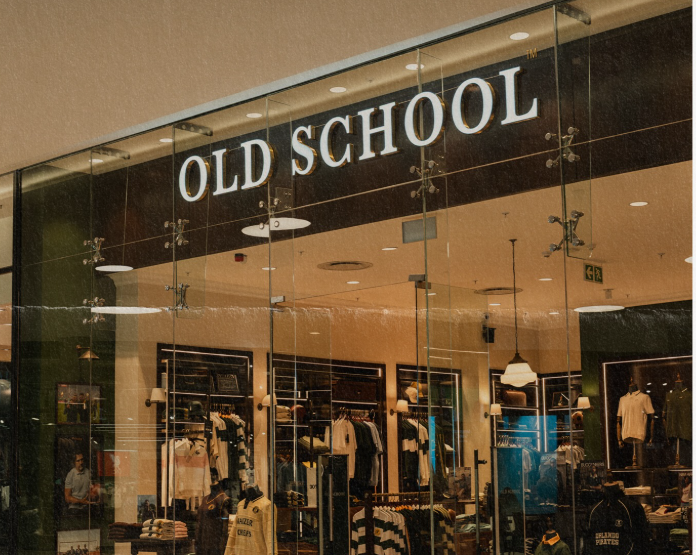
Cape Town – South African clothing startup Old School has grown from a Stellenbosch University dorm-room idea into an emerging global athleisure player, securing partnerships with major sports brands including the National Basketball Association and Manchester City Football Club in just seven years.
It all began in 2019 when brothers Daneel and Stef Steinmann wanted vintage-style shirts to support the Springboks during the Rugby World Cup — and discovered a gap in the market.
“Old school started in 2019 from a dorm at Stellenbosch University. For us – me and my brother – were quite obsessed with premium, like more vintage wear and I think that’s where we saw the gap in the market,” co-founder Daneel Steinmann said in an interview conducted by SAICA.
The idea quickly evolved into Old School, a brand built on nostalgia, sport culture and premium fan identity.
The early days were not without complications.
“Back then, we didn’t understand intellectual property or how rights work,” Steinmann told Bloomberg. “We just put a Springbok on there, we launched the product and we sold it.”
That initial run set the foundation for what would become a fast-scaling business. By the 2023 Rugby World Cup, Old School was ready for its biggest commercial breakthrough.
“It was just this crazy day,” Steinmann said. “That was almost how much we did in the previous year, and we did it in a day.”
The company reportedly generated about R4 million in Springboks merchandise sales in a single day during the tournament, cementing its position in South Africa’s growing sportswear market.
Old School now operates in a global athleisure industry valued at about $97 billion, according to Euromonitor, with nostalgia-driven fashion gaining momentum worldwide.
View this post on Instagram
The trend has been echoed globally, with companies such as Fanatics Inc. acquiring vintage jersey brand Mitchell & Ness in a $250 million deal backed by celebrity investors including LeBron James, Jay-Z and Kevin Hart, Bloomberg has reported.
Old School has followed a similar path in South Africa, expanding far beyond its student origins into a licensed merchandise business for leading clubs and national teams.
The brand now produces apparel for Kaizer Chiefs, Orlando Pirates and Bafana Bafana, while also securing international partnerships with clubs such as Liverpool FC, FC Barcelona and Manchester City.
“We felt that we were entering a space where there was already a globally proven model of people wanting to buy into their most beloved brands,” Steinmann said in comments shared by Bloomberg. “They don’t want to just buy the kit or athleisure wear — they want to wear it in a fashion piece.”
The company has also expanded into schools and grassroots sport, positioning itself as a lifestyle and identity brand rather than just a sportswear label.
While growth has been rapid, it has not been without setbacks. On the eve of opening its flagship store in Stellenbosch in 2024, the company faced legal action from the South African Rugby Union over intellectual property infringement.
Risk-taking and long-term thinking
“We realised we can’t use someone’s IP if you don’t pay for it,” Steinmann said. “That for us was a big turning point.”
The matter was later resolved through a licensing agreement that evolved into an ongoing partnership.
Today, Old School employs more than 250 people and operates over 20 retail stores, kiosks and pop-ups across South Africa, with further international expansion plans underway, including moves into the UK and India.
The company’s mission, Steinmann said, is rooted in emotional connection to sport and identity.
“I think for us, we have, along the journey, refined what Old School means and what we stand for. But what Old School is, it’s a premium supportive brand,” he said. “We believe that people wanna associate with brands and that consumers are moving away from cheap products – they want timeless things that can last for a while.”
Reflecting on the journey, he added that entrepreneurship requires both risk-taking and long-term thinking.
“Entrepreneurship is very much the ability to take risk and really make calculated decisions where you absorb risks, where you think the upside is worth more than the downside is,” Steinmann said.
“The second thing about entrepreneurship is actually living in the future blended in the present and the reality.”
Despite its growth, Steinmann says the core vision remains unchanged: building a brand that connects sport, fashion and identity.
“We really believe sport can unite this country,” he said. “And we thought merch is a great way to do it.”