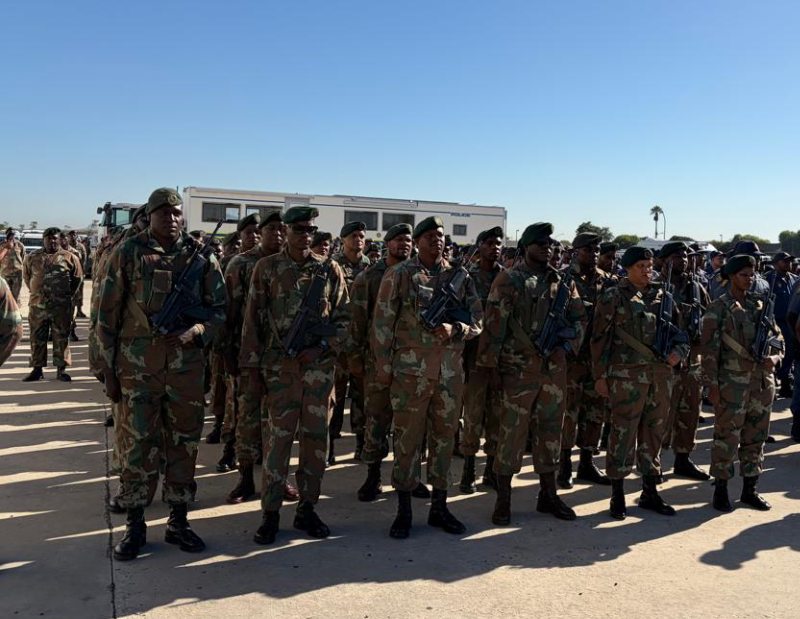
Cape Town — The deployment of soldiers to gang-hit communities on the Cape Flats has begun showing early signs of improved coordination on the ground, but concerns are mounting over whether South Africa’s strained justice system can keep up.
Mayoral Committee Member for Safety and Security, JP Smith, said he visited Mitchells Plain over the weekend to assess joint operations between the South African National Defence Force and South African Police Service.
“I joined our members in Mitchell’s Plain on Saturday evening to assess the integration with the first batch of the SANDF being deployed for additional support,” Smith said. “Already, the units are working well together.”
The deployment forms part of efforts to stabilise 17 identified crime hotspots across Cape Town, many of which have long been plagued by gang violence.
Smith pointed to the Western Cape’s Law Enforcement Advancement Plan (LEAP) as a critical intervention in recent years, saying it had helped bolster policing capacity where national resources fell short.
“LEAP has been instrumental and has caused the arrests in these SAPS precincts to surge,” he said.
However, he warned that gains made on the streets are often undermined in the courts.
“Too often, these same suspects that are arrested are released by the courts again just days later, in order to allow the detectives to complete their case dockets,” Smith said.
According to Smith, overburdened detectives face significant hurdles, including delays in forensic and ballistic reports, which stall investigations and prosecutions.
“Detectives shouldn’t be forced to wait weeks, or even months,” he said, adding that the backlog allows suspects to return to communities and continue criminal activities.
“All while these perpetrators are released back into their communities, where they continue their careers of violent crime.”
The addition of SANDF troops is expected to enhance intelligence-driven operations and improve the ability to track down suspects linked to recent shootings.
“With the SANDF now as additional support, along with our LEAP, it allows for the sufficient required resources to follow up on intel received and to arrest those criminals that have been identified,” Smith said.
But he stressed that policing alone would not resolve the crisis without broader systemic reform.
“We need the rest of the justice system to play along this time,” he said.
Smith called for urgent investment in forensic laboratories and urged the National Prosecuting Authority to make fuller use of existing laws, including the Prevention of Organised Crime Act.
He also criticised the lack of resources available to detectives, describing difficult working conditions that hamper their effectiveness.
“They cannot be forced to achieve the impossible — some without transport, without communications, without an office even,” he said. “Instead, just a growing pile of case dockets pushed into a dark corner in a back room.”