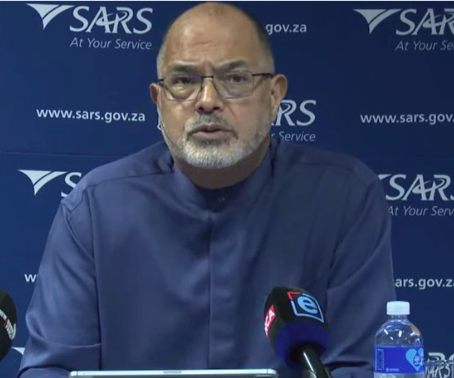
Cape Town – The South African Revenue Service (SARS) has collected a record R2.010 trillion in revenue, marking what Commissioner Edward Kieswetter has described as a defining milestone in the country’s fiscal recovery and institutional rebuilding.
In a message to South Africans, Kieswetter said the result was not only a financial achievement but evidence of a restored and modernised tax authority after years of institutional decline.
“This is an exceptional revenue performance on behalf of our nation,” Kieswetter said. “The figures announced this week represent not just a fiscal milestone, but what a committed institution, serving a resilient people, can achieve.”
The record collection follows what Kieswetter described as seven years of “focused revenue recovery” after a period marked by weakened governance, low staff morale, and declining public trust in SARS.
He said the organisation had undergone extensive reforms aimed at restoring integrity, rebuilding systems, and strengthening compliance. The transformation, he noted, had placed SARS on a stronger footing for a digital and artificial intelligence-driven future.
Thank you, South Africa
SARS Commissioner expresses sincere appreciation to all South Africans as SARS crosses the historic R2 Trillion milestone in net revenue collection for 2025/26… https://t.co/NuCSSxXQz2#SARSRevenue2026 pic.twitter.com/9qv5bjNgpa
— SA Revenue Service (@sarstax) April 2, 2026
“Our extensive rebuilding programme has restored institutional integrity, public trust, and credibility; it has modernised SARS and positioned it for the future,” he said.
Kieswetter credited SARS employees for the performance, saying approximately 14 500 staff members had played a central role in strengthening revenue collection despite global and domestic challenges, including the COVID-19 pandemic, economic slowdown, load shedding, and geopolitical uncertainty.
“Behind every rand collected stands the dedication of SARS employees committed to service excellence,” he said.
He added that cumulative net revenue had exceeded R11 trillion since 2020, with tax-to-GDP levels averaging about 25.9%, reflecting improved compliance and collection efficiency.
Protection of the vulnerable
Kieswetter said the impact of tax revenue was visible in public services such as hospitals, schools, infrastructure, and social grants, which he described as the foundation of South Africa’s social compact.
“Every cent collected with care translates directly into the lives of South Africans,” he said.
“Tax revenue is the bedrock of our shared citizenship and the protection of the vulnerable.”
He also warned that protecting the tax base was essential for national sovereignty, adding that non-compliance would be dealt with through lawful enforcement while compliant taxpayers would be treated with dignity.
As he prepares to step down after assuming office in 2019, Kieswetter reflected on what he called a transformative period for SARS, saying the organisation had moved from dysfunction to stability through sustained reform.
Human impact
“When I arrived in 2019, I found an institution in disarray,” he said. “We undertook a significant effort to restore values, rebuild processes, and treat every employee as a professional deserving of trust and development.”
He praised what he called the “human impact” of public service, citing stories of staff progression and taxpayer support during the pandemic as examples of SARS’ renewed purpose.
Kieswetter ended his message with a call for responsible citizenship, urging South Africans to comply with tax obligations honestly and without evasion.
“Your tax compliance is not merely a legal obligation; it is essential for our collective progress and wellbeing,” he said.
Follow African Insider on Facebook, X and Instagram
Picture: X/@sarstax
For more African news, visit Africaninsider.com
Compiled by Betha Madhomu