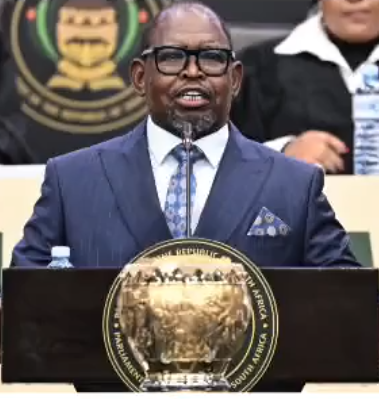
Cape Town – Finance Minister Enoch Godongwana tabled the 2026 Budget on Wednesday, declaring a fiscal turning point as government debt stabilises for the first time in 17 years and structural reforms begin to gain traction.
The budget outlines a consolidation strategy anchored on debt stabilisation, infrastructure-led growth and spending reforms. Here are the 10 key takeaways:
1. Debt stabilises after 17 years
Gross government debt is projected to stabilise at 78.9% of GDP in 2025/26 before declining to 77.3% in 2026/27 and 76.5% by 2028/29. The main budget primary surplus rises to 0.9% of GDP this year and is expected to reach 2.3% by 2028/29.
2. Budget deficit narrows
The consolidated budget deficit narrows to 4.5% of GDP in 2025/26, down from 4.8% previously estimated. It is projected to fall further to 4% in 2026/27 and 3.1% the following year.
3. Growth outlook improves modestly
Real GDP growth is forecast at 1.6% in 2026, up from 1.4% in 2025, averaging 1.8% over the medium term and reaching 2% by 2028. Logistics bottlenecks, weak infrastructure and foot-and-mouth disease remain risks.
4. R2.67 trillion spending plan
Total consolidated spending for 2026/27 amounts to R2.67 trillion, including a R5 billion contingency reserve. The social wage continues to account for more than 60% of non-interest expenditure.
5. No broad-based tax hikes
Stronger-than-expected revenue collections allowed government to withdraw R20 billion in previously proposed tax increases. Personal income tax brackets and rebates will be adjusted in line with inflation.
6. Targeted tax adjustments and levy increases
Excise duties on alcohol and tobacco will rise in line with inflation. Fuel levies will also increase modestly from April. Meanwhile, the VAT registration threshold for small businesses increases to R2.3 million, and tax-free savings and retirement deduction limits are expanded.
7. R12 billion in spending cuts identified
Government has identified R12 billion in medium-term savings through programme reviews, grant reforms and improved social grant verification systems. Nearly 35,000 fraudulent or incorrect social grants were terminated.
8. Infrastructure investment exceeds R1 trillion
Public-sector infrastructure spending will exceed R1 trillion over the medium term. Transport and logistics receive the largest share, with allocations for SANRAL and PRASA corridor recovery. Energy transmission investment will be supported through a new Credit Guarantee Vehicle.
9. Increased allocation to peace and security
Spending on peace and security rises from R268.2 billion in 2025/26 to R291.2 billion by 2028/29. Additional funding is allocated to defence, police, border management and the judiciary, including support for specialised courts.
10. Financial sector and structural reforms advance
Government will introduce a principles-based fiscal anchor in the Medium-Term Budget Policy Statement to entrench fiscal discipline. Draft regulations will bring crypto assets under exchange control rules. Reforms to manage R88 billion in unclaimed financial assets and modernise the national payments system are also underway.
Godongwana framed the budget as a consolidation phase following years of fiscal strain linked to state capture, the pandemic and global shocks. He said improved revenue performance, a credit rating upgrade and South Africa’s removal from the FATF grey list signal restored credibility.
The 2026 Budget, he said, aims to combine fiscal sustainability with infrastructure expansion and structural reform to place the economy on a more durable growth path.
Follow African Insider on Facebook, X and Instagram
Picture: X/@GovernmentZA
For more African news, visit Africaninsider.com
Compiled by Betha Madhomu