
State-owned land is reserved for land claims that will take several years to process
Text by Matthew Hirsch. Photos by Ashraf Hendricks.
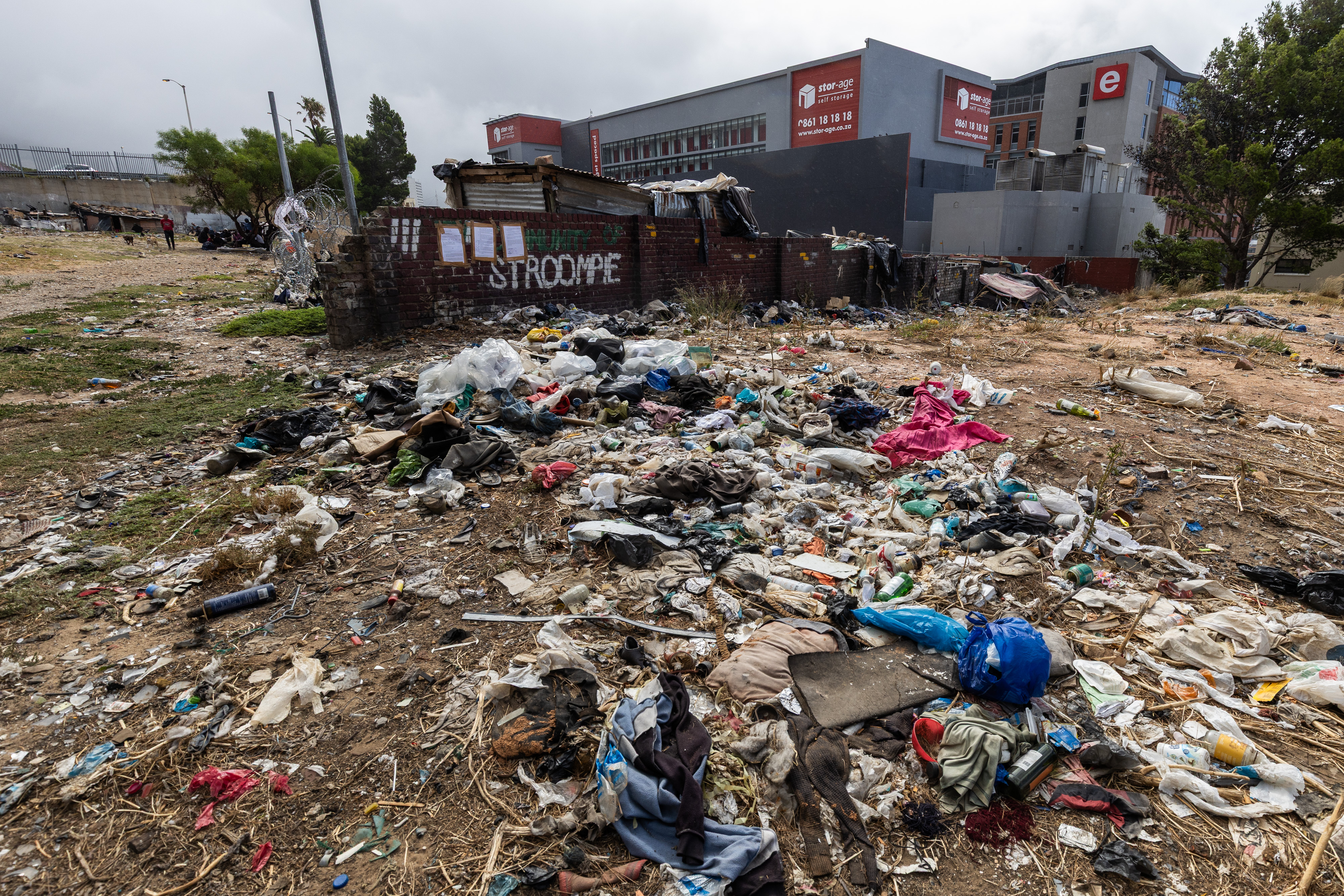
People living in the Stroompie informal settlement off Philip Kgosana Drive say they have been living there for 30 years.
- A piece of state-owned land in District Six is home to an informal settlement called Stroompie.
- Last month, the City of Cape Town obtained a court order preventing residents from erecting more structures.
- The land has been allocated to settle land claims lodged between 2014 and 2016.
- But those claims cannot be processed until all land claims countrywide lodged before 31 December 1998 have been settled.
“Simply because we are living in the space, we are deemed to be criminals,” says Ghaalib Beck, a resident of the Stroompie informal settlement in District Six in Cape Town.
Beck and dozens of other people live in shacks and tents in the settlement, without any water or sanitation. “Some people have been living here for more than 30 years,” says Beck. “We don’t have anywhere else to go.”
Stroompie is situated on state-owned land currently under the custodianship of the City of Cape Town. It borders the historic Trafalgar High School, below Philip Kgosana Drive. Last month, the City obtained a court order preventing anyone from erecting any new structures at the site.
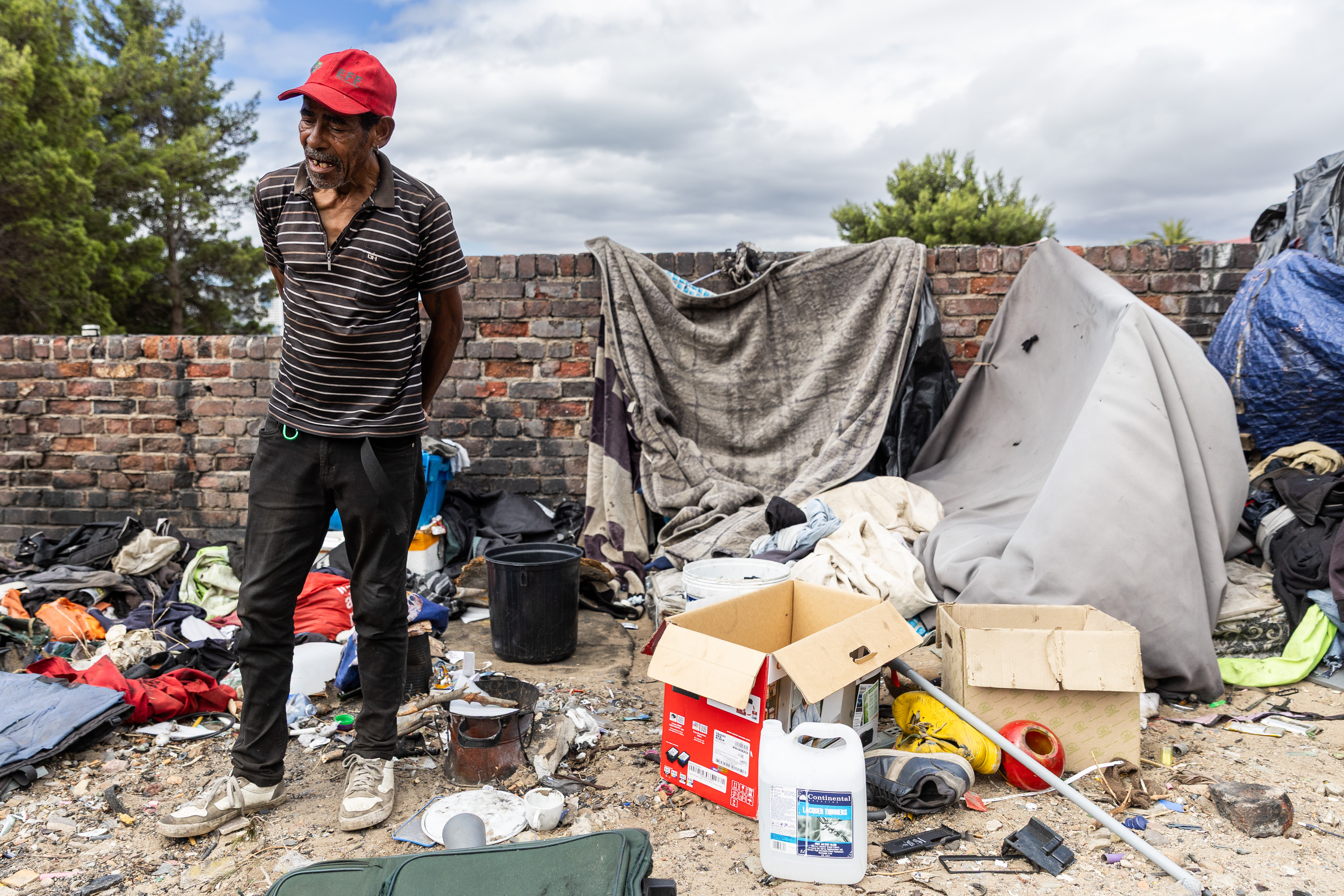
“Simply for living in the space, we are deemed to be criminals,” says Ghaalib Beck.
Francine Higham, the ward councillor for the area, said the municipality receives regular complaints about litter and sanitation on the site.
“There have also been complaints regarding criminal activity and inappropriate behaviour at the site,” said Higham.
There have been several fires, destroying homes and resulting in serious injuries, as well as at least one death, said Higham.
The land is unlikely to be developed any time soon, as it has been allocated to District Six claimants as part of a prolonged restitution process.
Sixty years ago, the apartheid government passed the Group Areas Act, under which District Six was declared a whites-only area and coloured and black families were forcibly removed to areas on the Cape Flats.
A total of 2,650 people lodged successful land claims before a 31 December 1998 deadline, of whom 1,485 received financial compensation, and 247 have returned to the area. More than 950 homes are still set to be built in the area for the remaining claimants, but the project is stalled due to funding constraints.
An additional 749 people lodged “new order” claims in a second window, between 2014 and 2016, but according to a court order, their claims may only be processed after all the land claims countrywide submitted before 1998 are finalised. As of July 2024, there were still 80,000 original land claims from 1998 (across the country) that had to be settled before the “new order” claims could be assessed.
The land on which Stroompie is situated is reserved for these “new order” claims, says Department of Land Reform and Rural Development spokesperson Linda Paige.
There have been several proposals for how to use the land until District Six claimants return, including turning it into a garden. Higham said the municipality is considering a new proposal by a non-profit organisation, but declined to provide details.
But Paige said in response to questions that any proposal for using the land would have to be “adopted and approved by the majority of the remaining claimants” of District Six.
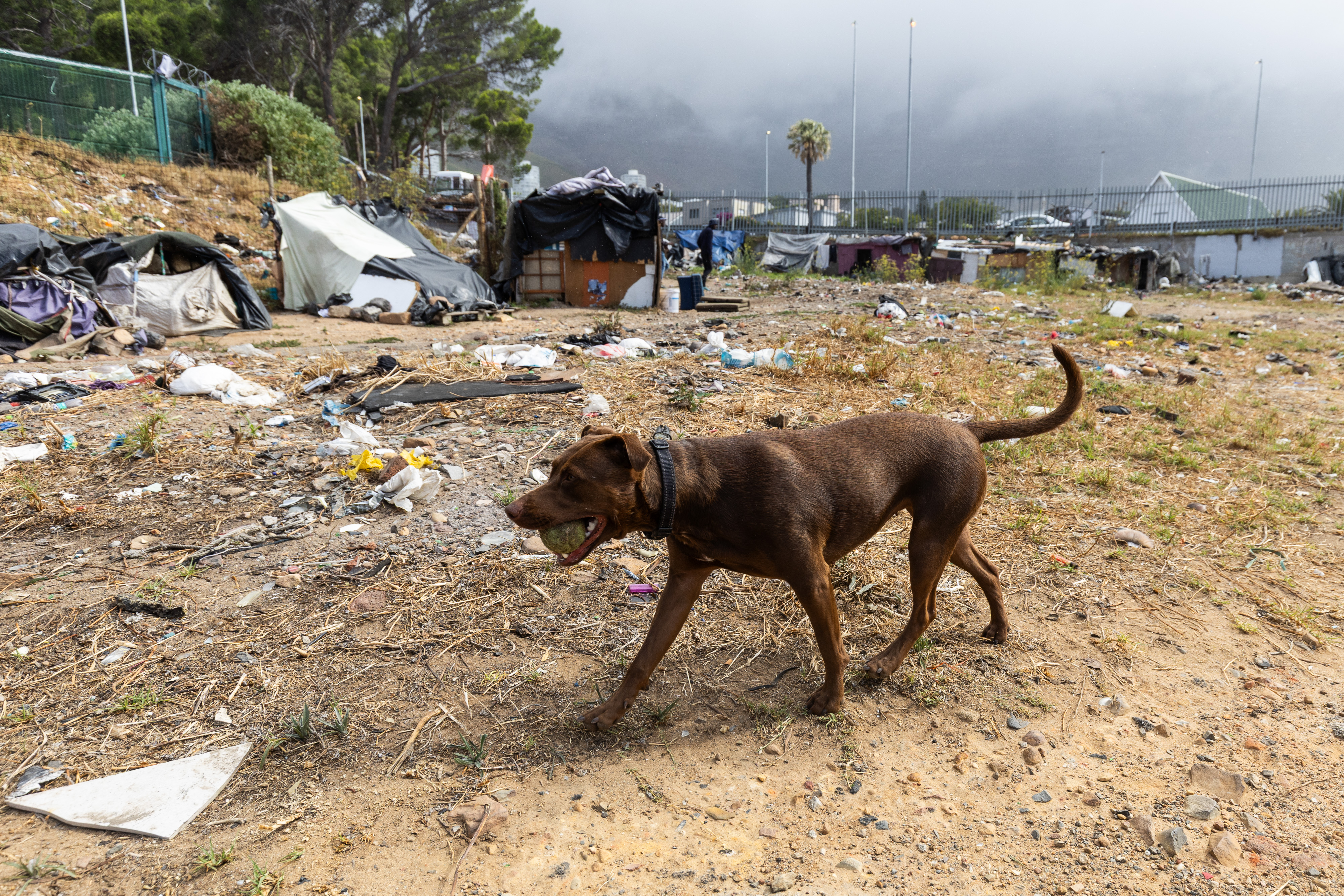
A dog walks across the Stroompie informal settlement, which borders Trafalgar High School.
Sandile Mhlongo, who has lived in Stroompie for more than 20 years, said the settlement is often raided by law enforcement officials.
Mhlongo said he would like to see toilets and taps installed at the site. At the moment, the only source of water is a stream running through the fence of the school.
“We would not want unilateral decisions being forced down our throat,” said Beck. “Obviously, we would have to be consulted. We are grown-ups.”
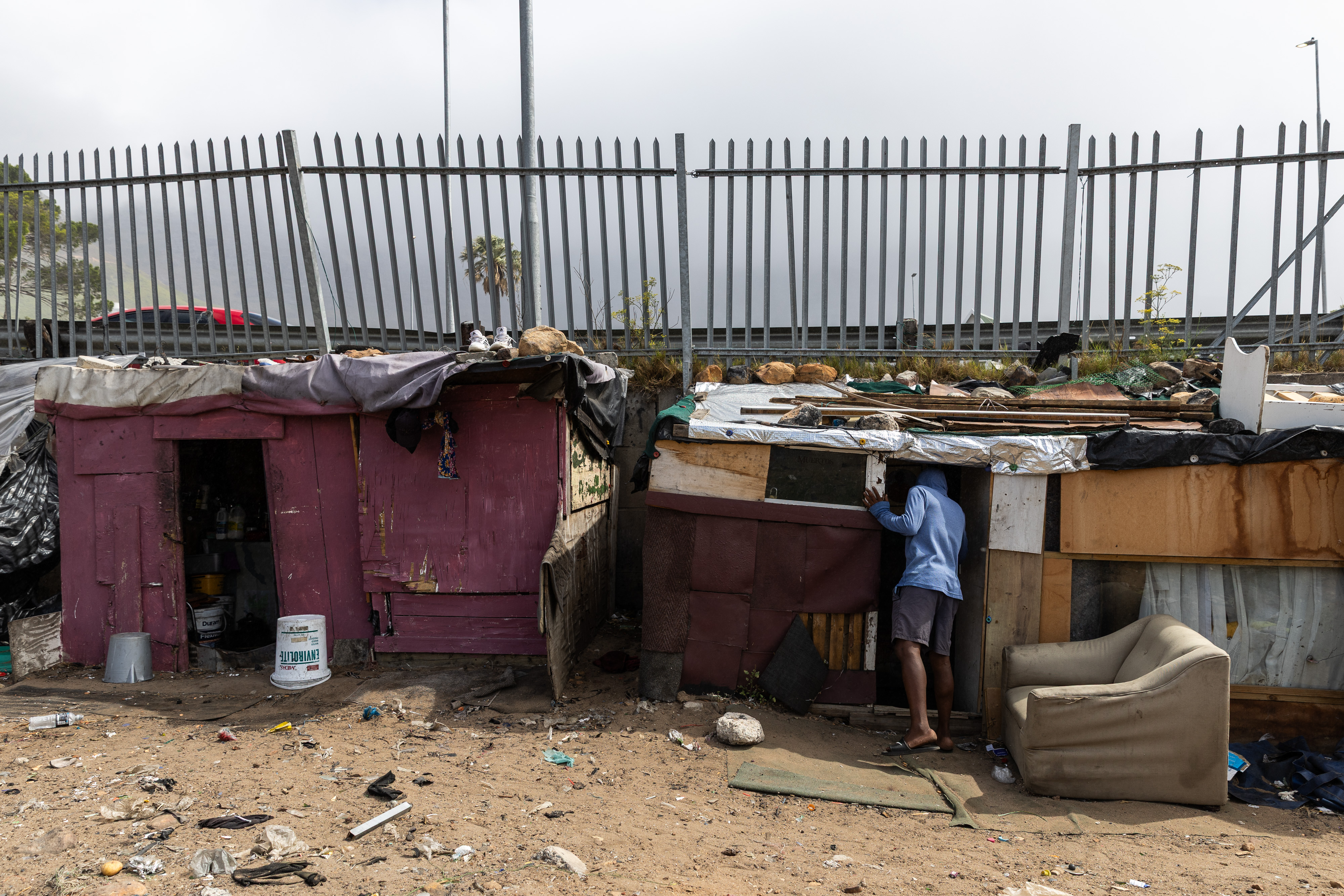
Shacks have been built against Philip Kgosana Drive.
Higham said the City’s offers of alternative emergency accommodation, at safe spaces or the Haven Night Shelter, have only been taken up by a few of the occupants. The most recent fire caused some of the occupants to re-erect shelters directly on the fence of Trafalgar High School, she said.
She said the City “remains deeply concerned about not only the living conditions of those occupying the property” on the edge of the school, but also about the effect that this is having on the learners of the school.
“Much of the land in question remains vulnerable to similar occupations, and the City spends a great deal of time and capacity monitoring this land as best we can,” she said.
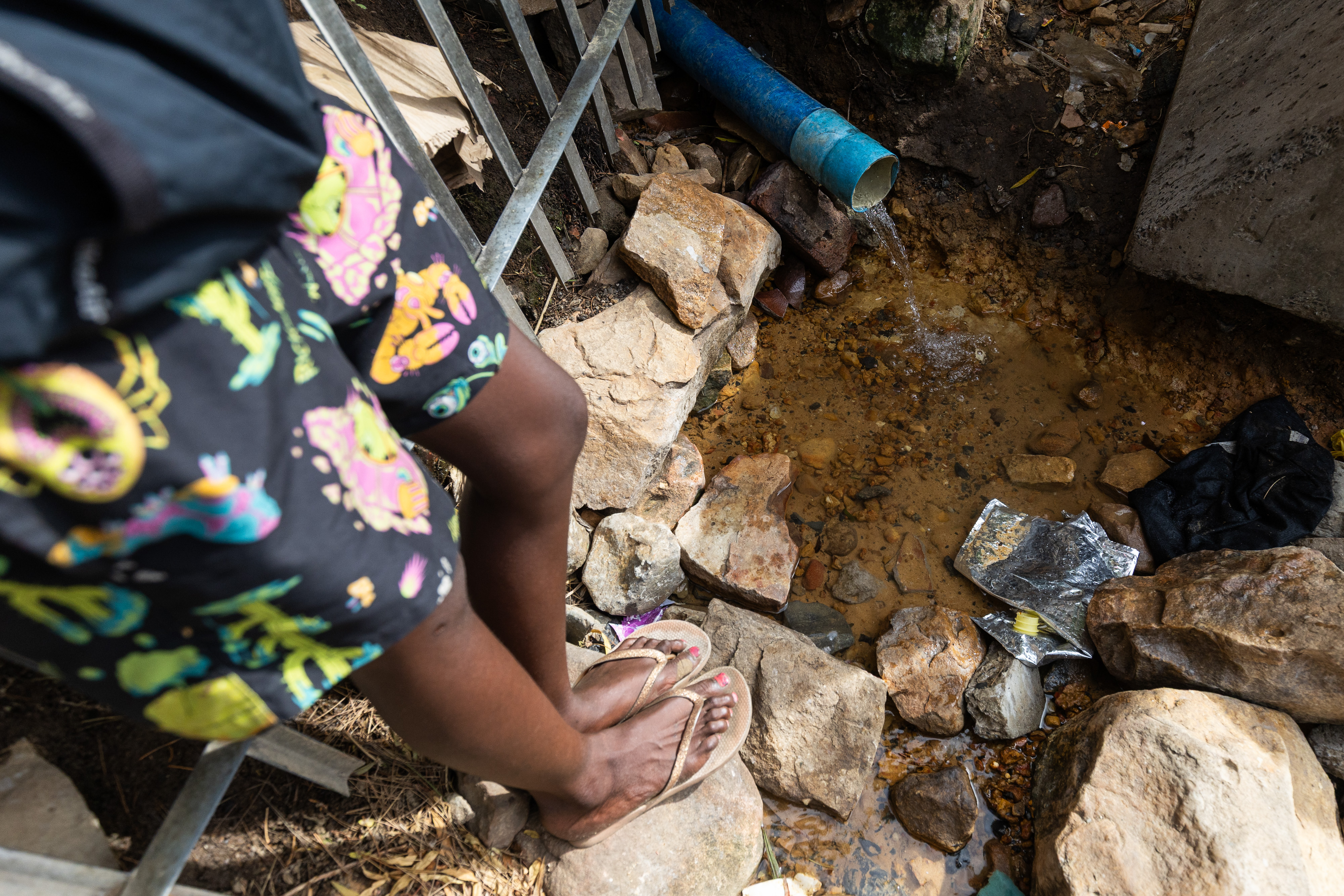
Residents of Stroompie get water from this pipe running through the high school fence.
© 2026 GroundUp. This article is licensed under a Creative Commons Attribution-NoDerivatives 4.0 International License.
Follow African Insider on Facebook, X and Instagram
Picture: Pixabay
For more African news, visit Africaninsider.com