Cape Town – Industry leaders, policymakers and mining experts have called for urgent action to formalise artisanal and small-scale mining (ASM), warning that millions of livelihoods depend on integrating the sector into the legal economy.
The issue took centre stage at Investing in African Mining Indaba 2026, held in Cape Town this week.
Delegates heard that ASM plays a vital role in the global mineral economy, employing about 45 million people directly, while an estimated 315 million people benefit indirectly. However, speakers stressed that the sector continues to face regulatory and economic barriers that limit its development and expose miners to unsafe working conditions.
South Africa pushing regulatory reform
Ntokozo Nzimande, deputy director-general for mining and petroleum policy development at the Department of Mineral Resources and Energy, acknowledged that South Africa has historically lagged behind in establishing clear regulations for ASM.
She said recent amendments to the Mineral and Petroleum Resources Development Act and the introduction of a new artisanal mining licensing system were designed to help small-scale miners obtain permits and transition into formal mining operations.
“The intention is to regularise these activities and to provide a path for artisanal and small-scale miners to graduate to become junior miners and enter the mining mainstream,” Nzimande said.
Drawing on personal experience, Nzimande described growing up in a KwaZulu-Natal community where local women mined coal informally to support their families, highlighting the human and economic realities behind the sector.
DRC offers lessons in formalisation
Experiences from Democratic Republic of the Congo were also presented as a potential model. Popol Mabolia Yenga, managing director of the country’s mining cadastre agency, said the government established official artisanal mining zones after the collapse of a state-owned mining company forced many miners into survival-based operations.
He explained that forming mining cooperatives helped artisanal miners access international markets while improving traceability and compliance standards. Formalisation also enabled miners to access financial services, insurance and retirement benefits.
Private sector partnerships expand opportunities
The private sector is also playing a growing role in supporting artisanal miners. Norman Mukwakwami, global head of responsible sourcing – metals at Trafigura, highlighted a partnership involving Chemaf and the COMIAKOL miners collective at the Mutoshi Mine.
Mukwakwami said the initiative has enabled artisanal miners to safely supply cobalt to global markets while improving safety standards and income stability. He noted that Africa is home to around 10 million of the world’s estimated 14 million artisanal miners, underlining the scale of the challenge.
Legal and policy support still needed
Mohammad Stevens, legal counsel at the African Legal Support Facility, said governments must strengthen legal frameworks to regulate the sector effectively. He stressed the need for clear policies on where artisanal miners can operate, as well as improved environmental, health and safety standards.
Stevens also highlighted the importance of addressing gender equality and ensuring artisanal mining is integrated into broader mining value chains.
Balancing large and small-scale mining
Speakers at the conference agreed that artisanal and large-scale mining can coexist if supported by proper regulation and cooperation. Nzimande pointed to examples where large mining companies had transferred unprofitable concessions to smaller operators, allowing both sectors to benefit economically.
Delegates further stressed the importance of providing artisanal miners with secure tenure rights and development pathways that allow them to transition into mechanised small-scale and junior mining operations.
The Investing in African Mining Indaba 2026, held at the Cape Town International Convention Centre from 9 to 12 February, highlighted ASM formalisation as a key priority for unlocking economic growth, improving safety standards and ensuring inclusive participation in Africa’s mining sector.
Follow African Insider on Facebook, X and Instagram
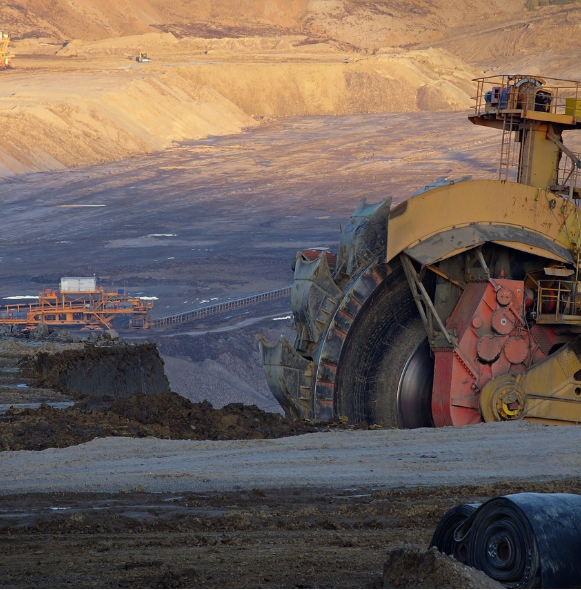
Picture: Pixabay
For more African news, visit Africaninsider.com
Compiled by Betha Madhomu